Traces of Empire After Their Defeat
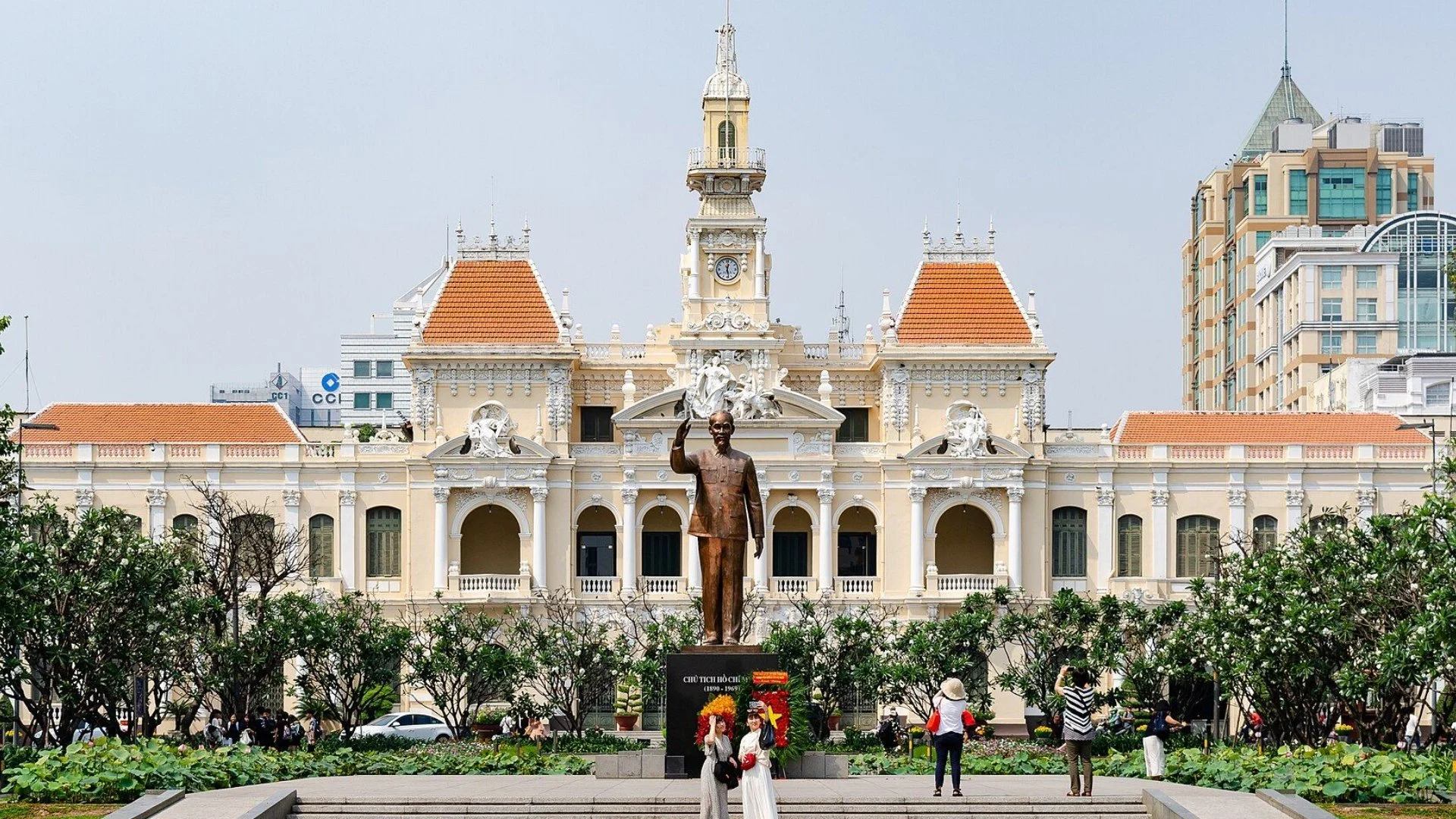
Ho Chi Minh City Hall, Ho Chi Minh City, Socialist Republic of Viet Nam
March 1975, The North Vietnamese Army launched The Spring Offensive, cities that were under control of the South Vietnamese State fell faster than anyone could have imagined. Key cities like Huế and Đà Nẵng were under control of the North Vietnamese and that was not the end of it, The North Vietnamese had their eyes set on capturing Saigon, the capital of South Vietnam.
April 30th 1975, Vietnam, The North Vietnamese entered Saigon from every direction, their tanks reached the presidential palace, famously crashing the tank into the gates, swiftly taking the palace and seizing power, Vietnam was from then on unified as one country.
Seeing that new the country was at war with the Chinese, French and Americans, did they think about removing everything of foreign influence? Quite the opposite, Buddhism entered through Chinese Influences, French architecture and urbanism drastically changed how the country thought of its own identity, the Americans in modern Vietnamese history has helped with the modernization of their economy.
Every civilization leaves a mark, good and bad, and ultimately, the people take the good and leave the bad in the past, Vietnam kept their French Colonial Architecture and after a few generations, they became Vietnamese, the local people learned the skills to build that way with a lot of mixing from their own culture, they lived around it and they made it apart of their history and traditions.
Almost every country was ruled or indirectly affected by empires, civilizations borrow from others and appropriate it for themselves in what suits them best. Some places do things better than other, The Europeans borrowed from the Greeks and Romans, the Islamic world borrowed from the Romans and Persians, the Koreans and Japanese borrowed a ton from China, and so on.
What is immediately clear is architecture and urbanism, Vietnam was colonized by the French, and they took architecture from France and adapted it to the climate, altitude and soil of Vietnam, and what used to be French colonial architecture became Vietnamese architecture after 2-3 generations. Ho Chi Minh City now looks similar in urban layout to Paris and that is without accident.
The same can be seen in Singapore, the British colonized them, so with that came a unique fusion of British and Chinese architecture, examples can be seen in Singapore’s Shophouses, Chinese in layout but European in Architecture with the Corinthian Order Columns and their many beautiful motifs that eventually became Singaporean in nature.
These buildings become part of a country’s heritage, irrespective of which empire is controlling it or which political ideology a government follows. Buildings are apolitical and, are instead, a tool used to serve the needs of the inhabitants who live in said country.
After World War II, many countries were freed of colonization, a step in the right direction, however a crucial issue we face today, as a result of colonialism, is how much we get bogged down by our past. A society that does not move on from the past is only stuck in it, we must understand that the future is only bright for those who learned from the past and adapt to the new realities.
Our forefathers fought valiantly against the oppressor, and rightly so, but our generation’s fight is against a new oppressor that is foaming at the mouth to erase all forms of heritage. The modernist movement that originated from Western Europe after World War II is the new colonizer who has successfully convinced every country of the idea that looking the same and building the same is a form of progress.
With a bit of logic, coffee, and a Google search, we can learn about our climate, what we used to do to survive in said climate then build according to our traditions, values, religion, and heritage. Sebastiano Serlio wouldn’t have existed if he lived in our time, Mimar Sinan would be ashamed of what Muslims call architecture now, and the only ones impressed would be the propagandists who would’ve killed to be effective as the pioneers of the modernist movements, they who convinced the world that millennia of rich architecture should be demolished only for it to be replaced with building shtat look akin to tuna cans.