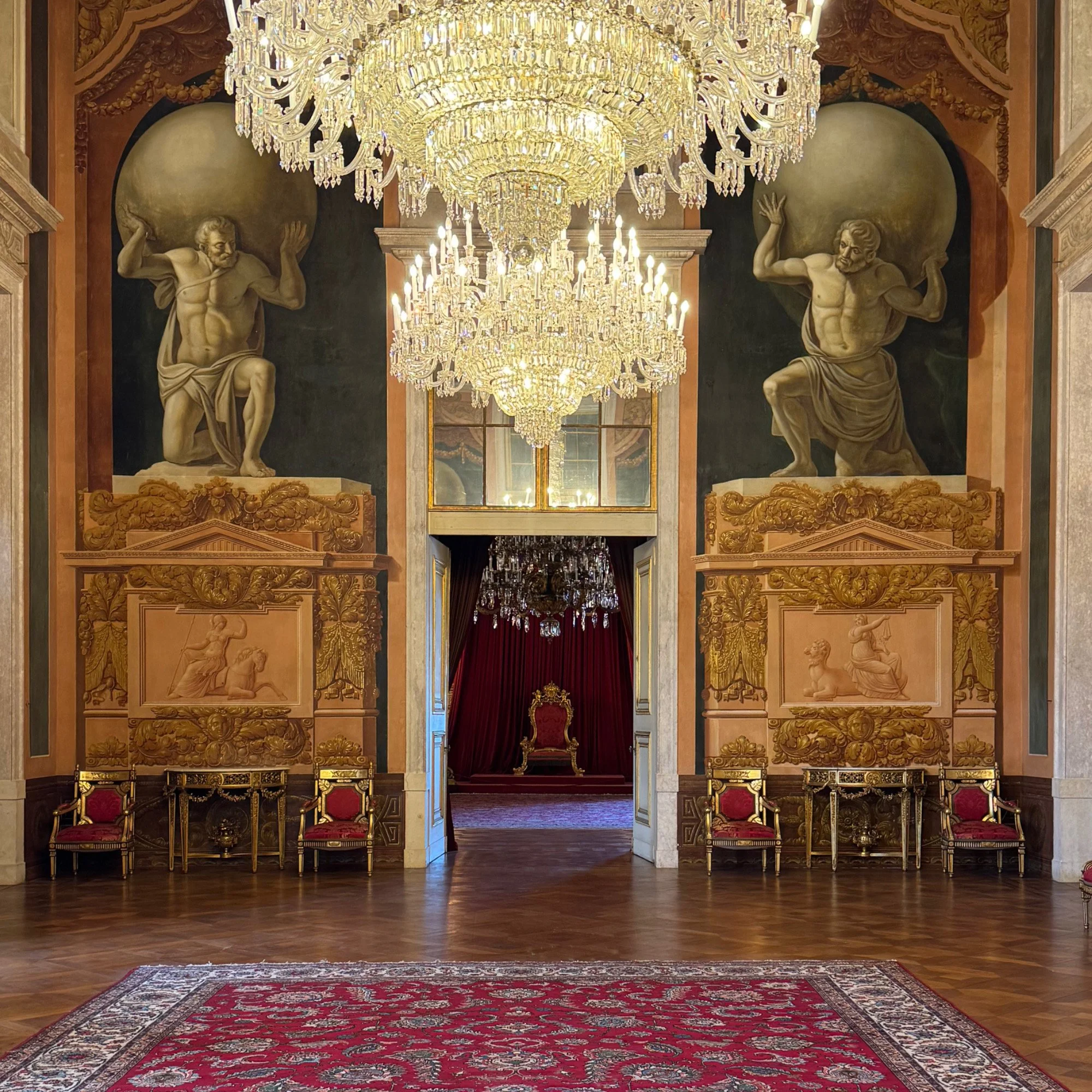
Predicting Beauty: A Map of Aesthetic Experience
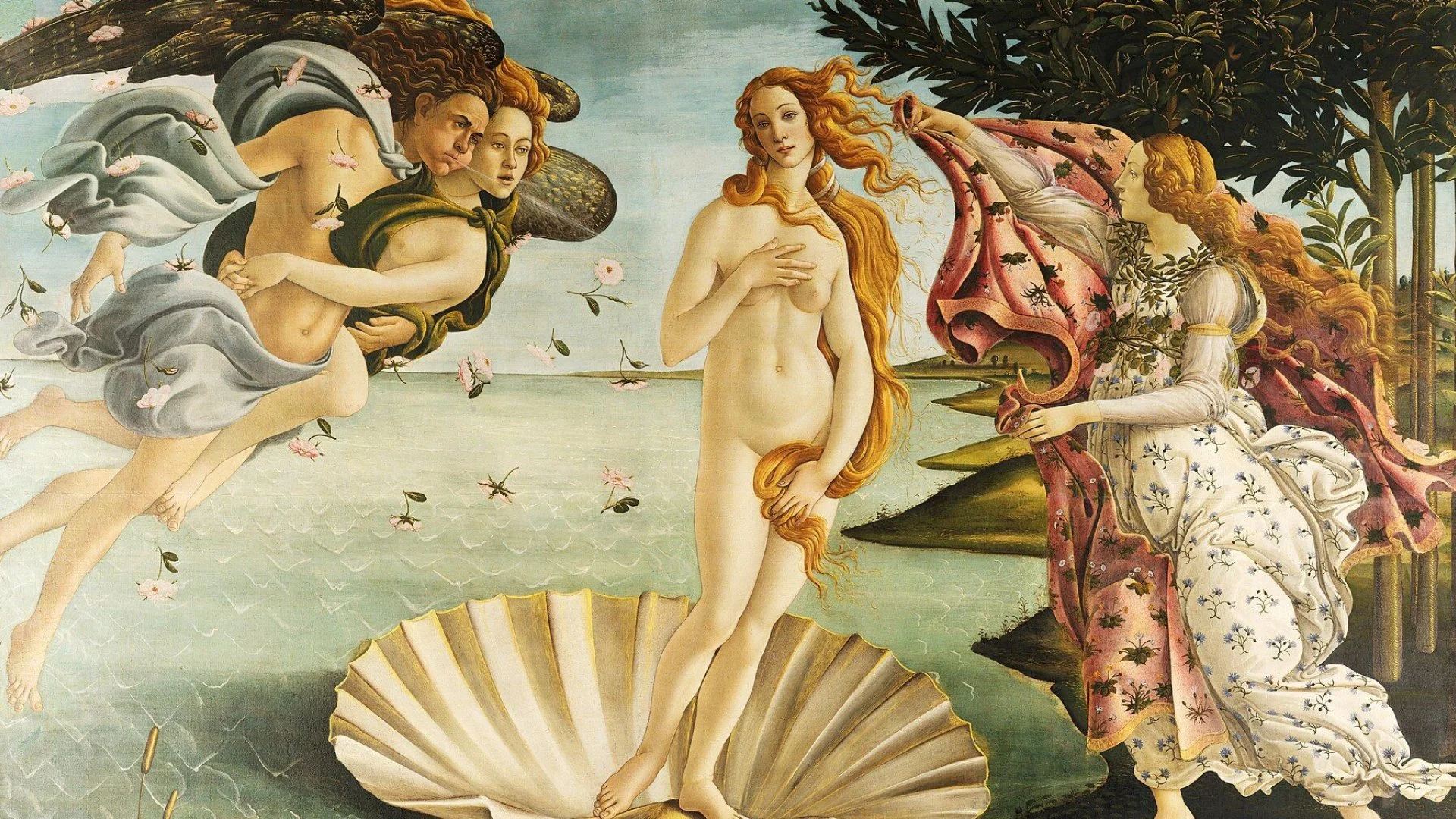
The Birth of Venus by Sandro Botticelli, c. 1484–1486
“The mind of man has naturally a far greater alacrity and satisfaction in tracing resemblances than in searching for differences”. – Edmund Burke
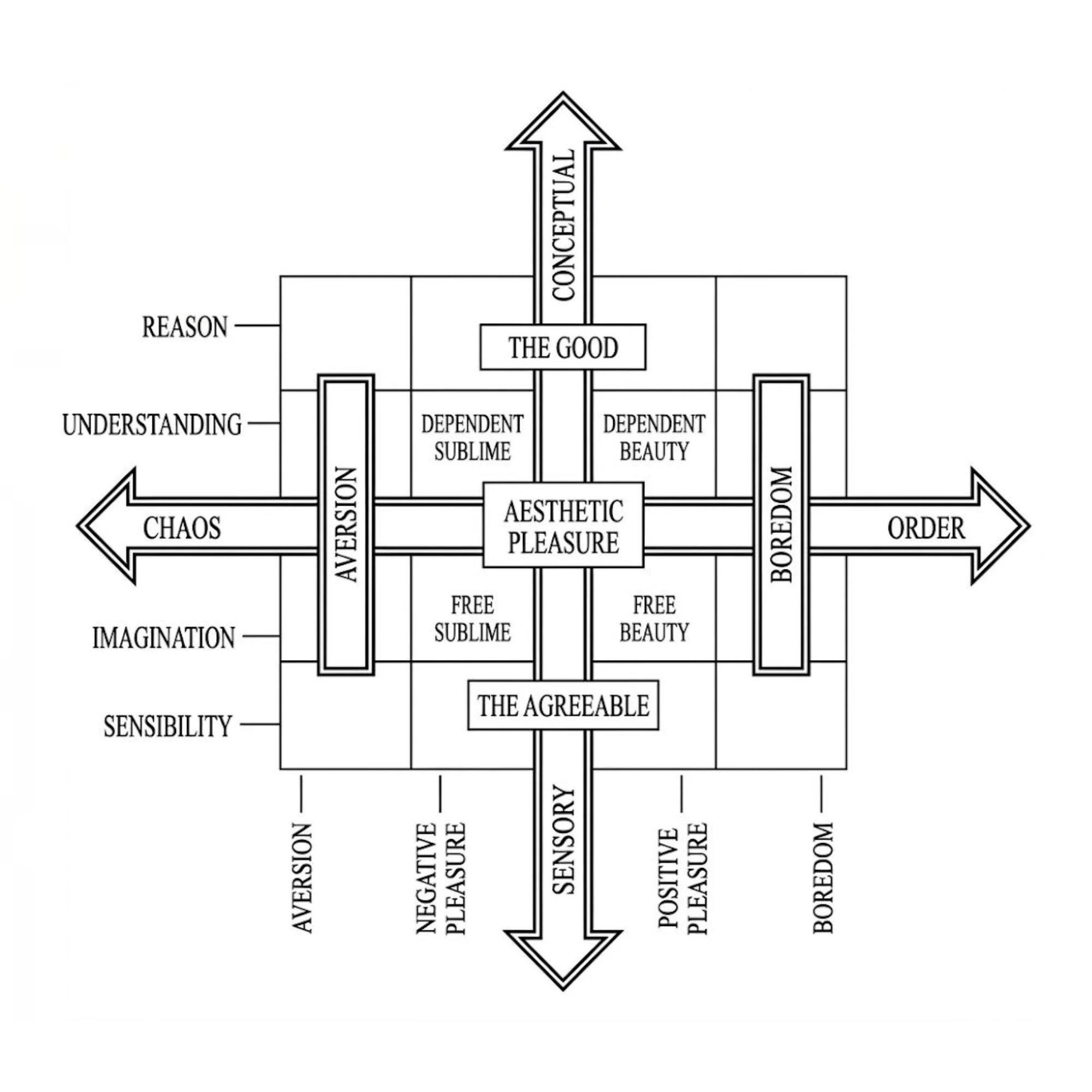
Map of Aesthetic Experience, by Roberto Galán
As architects, we make aesthetic decisions every day. Yet when we look for a theoretical foundation on which to base those decisions, we encounter an extraordinarily vast and complex intellectual territory—one in which it is very easy to get lost.
Faced with this situation, there is a need for a tool capable of providing a broader view of the aesthetic phenomenon. This is why I propose creating a map of aesthetic experience.
To construct this map, I draw primarily on the Free Energy Principle (FEP), a highly general framework for perception, learning, and action developed by neuroscientist Karl Friston, as well as on related theories such as predictive processing and processing fluency (Friston, 2010; Reber, Schwarz & Winkielman, 2004).
Throughout the process, I will try to remain faithful to the technical language. At the end, however, I will assign phenomenological labels to the different regions of the map in order to make it more intuitive to use. Some of these labels will be inspired by the Kantian tradition (Kant, 1790).
Chaos/Order: According to the FEP, our brain is constantly trying to predict what will happen, and in order to do so, it constructs an internal model of the world (Friston, 2010).
This model generates predictions that are then compared with information arriving through the senses. The greater the correspondence between the two, the lower the prediction error (Friston, 2010). This relationship is important because it will define the horizontal axis of our map: high prediction error on the left, low prediction error on the right.
We will call this first axis “chaos–order,” understanding chaos and order not as absolute values, but as values relative to the subject’s mental models at a given moment.
Aversion/Boredom: If we can determine with some precision where an object will fall along this axis, we may also be able to anticipate which action policies are most likely for a given estimated model.
Imagine, for example, an agent with a very simple model that knows only blue squares. When presented with another blue square, prediction error would be minimal, so the object would fall at the far right of the axis, closer to order. The agent would encounter exactly what it expected and would therefore have very little to learn.
If, on the other hand, it encountered a completely different figure, such as a red circle, prediction error would be enormous, and the object would fall at the far left of the axis, closer to chaos. Correcting such a large error would be highly demanding, since it would require a profound update of the agent’s model.
In both cases, the agent would find little value in continuing to interact with the object. At one extreme it experiences aversion; at the other, boredom.
Negative Pleasure/Positive Pleasure: Between these two extremes, however, there is an optimal region in which prediction error is reducible (Berlyne, 1971; Van de Cruys & Wagemans, 2011). Objects that fall within this region provide the agent with enough new information—epistemic value—without straying too far from its preferred states—pragmatic value.
An object of this kind would be neither a blue square nor a red circle, but one that partially matches the model—for example, a red square.
When interacting with such an object, the agent quickly detects important differences, such as the color red, but also similarities. It soon realizes that it does not need to model the new object from scratch, since it can reuse part of the structure of its existing model. By eliminating redundancies, the model becomes compressed, and error processing becomes more efficient and fluent (Schmidhuber, 2009).
In organisms with nervous systems, this may be experienced as a feeling of relief or satisfaction, functioning as a reward mechanism that encourages the exploration and exploitation of particular environments and resources (Van de Cruys & Wagemans, 2011; Reber, Schwarz & Winkielman, 2004).
We will call this sensation “pleasure” and place it within the region where prediction error is reducible, further distinguishing between “positive pleasure,” closer to order, and “negative pleasure,” closer to chaos.
Sensory/Conceptual: So far, we have discussed pleasure in a broad sense, linked to the efficient reduction of prediction error. But this is not yet aesthetic pleasure. We need to introduce another variable.
In our example, when the agent manages to separate the “idea of a square” from the blue square in its model and apply it to the red square as well, it is not only making the updating process more efficient; it is also creating a higher level of abstraction.
This process of detecting regularities occurs repeatedly throughout an individual’s cognitive development, resulting in a hierarchically organized structure of beliefs in which higher levels represent increasingly general and abstract causes, while lower levels represent increasingly particular and concrete features (Piaget & Inhelder, 1958; Friston, 2010).
We can represent this graphically on our map by means of a vertical axis, which we will call the “sensory–conceptual” axis.
Sensibility/Imagination/Understanding/Reason: The first, moving from bottom to top, corresponds to the level of sensory processing. For example, when we detect lines and colors.
The second corresponds to the representational level, where sensory data are grouped into stable forms or objects. For example, when we predict that a blue square will produce four straight lines enclosing a blue area.
The third corresponds to the level of concrete operations, where what is modeled are the relationships between different objects. For example, when we predict that changing the color of a blue square to red will result in a red square (Piaget & Inhelder, 1958).
The fourth corresponds to the level of formal operations, where relationships between relationships are modeled. For example, when we predict that changing the color of any figure will produce that same figure in the new color (Piaget & Inhelder, 1958).
We will call these four different levels of processing “sensibility,” “imagination,” “understanding,” and “reason.”
The Agreeable/The Good: In a predictive hierarchy such as the one described above, prediction errors propagate upward while predictions propagate downward (Friston, 2010). This dynamic means that the feeling of pleasure is experienced differently depending on the level at which prediction error is being reduced.
At higher levels, errors encounter progressively fewer higher levels to which they can propagate. At lower levels, predictions eventually reach a point beyond which they can no longer descend. In both cases, a boundary appears.
As a result, at the upper end of the axis, the agent becomes determined by its preferred states and experiences pleasure as a feeling of “the good” or “the useful.” At the lower end, experience is determined by perceived states, and pleasure is experienced as “the agreeable.”
An intermediate region therefore emerges, one that is not completely determined either by what is or by what ought to be. We will call this region “aesthetic.”
The Four Quadrants: From the preceding discussion, it follows that what we call “aesthetic pleasure” occupies the central region of the map: between aversion and boredom, and between the agreeable and the good.
Within this region, the intersection of the chaos–order and sensory–conceptual axes produces four quadrants in which aesthetic pleasure manifests itself in different ways.
We will now examine each of these four quadrants.
I. Free Beauty: Free beauty arises from the object’s fit with our innate mental structures, corresponding, within the FEP framework, to low prediction error at lower levels. We can subdivide it into two categories:
a) The Simple – Low Epistemic Value: This includes anything possessing a degree of regularity that facilitates information processing: simple geometric forms, clearly defined edges, flat colors, symmetry, continuous lines and repetitive patterns, harmonious proportions, self-similarity, and so on (Reber, Schwarz & Winkielman, 2004).
b) The Safe – High Pragmatic Value: This includes things that are easily processed by the brain not because they are simple, but because they represented an evolutionary advantage for our ancestors over thousands of years: smooth forms, visual stability and balance, open spaces with water and abundant vegetation, cute and youthful features, signals of health and genetic quality, and so on (Bar & Neta, 2006; Dutton, 2009).
An architectural example of this “free beauty” would be the Ipês House by Studio MK27, which combines simple geometric forms, continuous lines, and repetitive patterns with natural materials, vegetation, and water.

Ipês House, São Paulo, Federative Republic of Brazil
II. Free Sublime: The free sublime arises from the object’s mismatch with our innate mental structures, corresponding, within the FEP framework, to high prediction error at lower levels. We can subdivide it into two categories:
a) The Complex – High Epistemic Value: This includes anything possessing a degree of irregularity that makes information processing more difficult: forms with poorly defined edges, irregular surfaces, complex or amorphous geometries, asymmetry, lack of proportion, visual noise, multiplicity, the absence of recognizable patterns, and so on (Berlyne, 1971).
b) The Dangerous – Low Pragmatic Value: This includes things that are difficult for the brain to process not because they are complex, but because they represented a threat to our ancestors over thousands of years: angular forms, visual instability and imbalance, bodies that appear unhealthy, inhospitable environments, destructive forces of nature, and so on (Bar & Neta, 2006; Dutton, 2009).
An architectural example of this “free sublime” would be the Steinhaus by Günther Domenig, which combines complex, fragmented geometries with angular forms and a strong sense of instability.

Domenig Steinhaus, Carinthia, Republic of Austria
III. Dependent Beauty: Dependent beauty arises from the object’s fit with our learned mental structures, corresponding, within the FEP framework, to low prediction error at higher levels. We can subdivide it into two categories:
a) The Familiar – Low Epistemic Value: This includes anything that resembles what we already know, thereby facilitating information processing: everyday objects, childhood memories, recognizable environments, archetypal forms, and so on.
b) The Normative – High Pragmatic Value: This includes things that are easily processed by the brain not because they are familiar to us, but because they are socially accepted: displays of wealth and power, art validated by cultural institutions, symbols of belonging or social distinction, and so on (Bourdieu, 1984).
An architectural example of this “dependent beauty” would be Hanover Lodge by John Nash, which combines the typical image of a luxury mansion with strict adherence to the classical canon.

Hanover Lodge, London, United Kingdom of Great Britain and Northern Ireland
IV. Dependent Sublime: The dependent sublime arises from the object’s mismatch with our learned mental structures, corresponding, within the FEP framework, to high prediction error at higher levels. We can subdivide it into two categories:
a) The Strange – High Epistemic Value: This includes anything that differs from what we already know, thereby making information processing more difficult: objects without a clear function or meaning, unusual forms, avant-garde art, and so on (Van de Cruys & Wagemans, 2011).
b) The Subversive – Low Pragmatic Value: This includes things that are difficult for the brain to process not because they seem strange to us, but because they challenge the established order: social criticism, provocative art, the transgression of moral and aesthetic norms, countercultural expressions, and so on.
An architectural example of this “dependent sublime” would be the House in New Castle County by Robert Venturi, John Rauch, and Denise Scott Brown, which combines unconventional decorative elements with historical references that challenge modernist conventions.
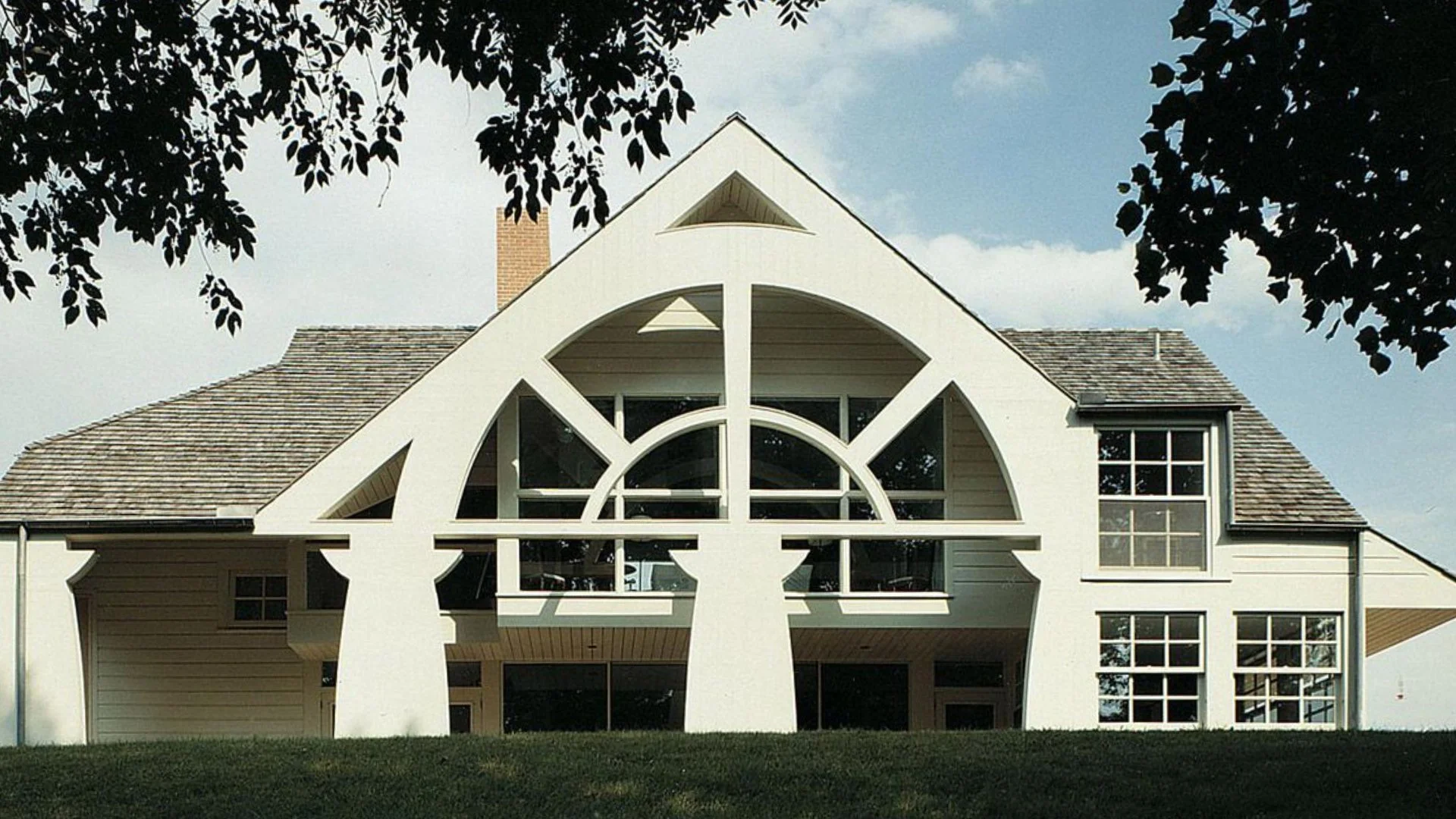
House in New Castle County, Delaware, United States of America
Using the Map: We can position our work within any of these four quadrants depending on the effect we want to achieve: Free Beauty, if what we seek is perceptual harmony. Free Sublime, if what we seek is emotional intensity. Dependent Beauty, if what we seek is social validation. And Dependent Sublime, if what we seek is critical depth.
A simple way to do this is to organize the eight categories into which the four quadrants are subdivided into four pairs of opposites, and then ask questions such as: How simple or complex does this volume seem to me? Or: How normative or subversive would it be to use this style in this context?
This allows us to regulate the overall amount of order and chaos present in a work, facilitating prediction at some levels while making it more difficult at others, thereby avoiding both boredom and aversion.
This alone does not guarantee that a work will produce aesthetic pleasure, but it does provide a heuristic model that can guide both the creative process and critical analysis.
The Free Energy Principle offers a framework general enough to bring ideas from very different traditions into relation with one another. Philosophical concepts such as Kant’s can enter into dialogue with psychological theories of cognitive development, complexity, novelty, and processing fluency, using a common language based on prediction, learning, and action.
The map presented in this essay emerges precisely from this attempt at integration. However, the proposed correspondences should not be understood as demonstrated equivalences or as necessary consequences of the Free Energy Principle. Rather, this is a tentative construction whose purpose is to explore whether apparently distinct phenomena can be understood as manifestations of the same underlying dynamic.
From this perspective, the map does not seek to solve the problem of beauty, but to offer a new way of formulating it. Asking how predictable a work is, at which levels it is predictable, which expectations it confirms or contradicts, and how easily those discrepancies can be reduced may help us better understand both our own aesthetic decisions and the experiences they might produce.
Predicting beauty, then, may not consist in determining in advance what will be beautiful, but rather in better understanding the conditions under which beauty can emerge.