In the Shade of Olive Trees and the Ephemeral Cities
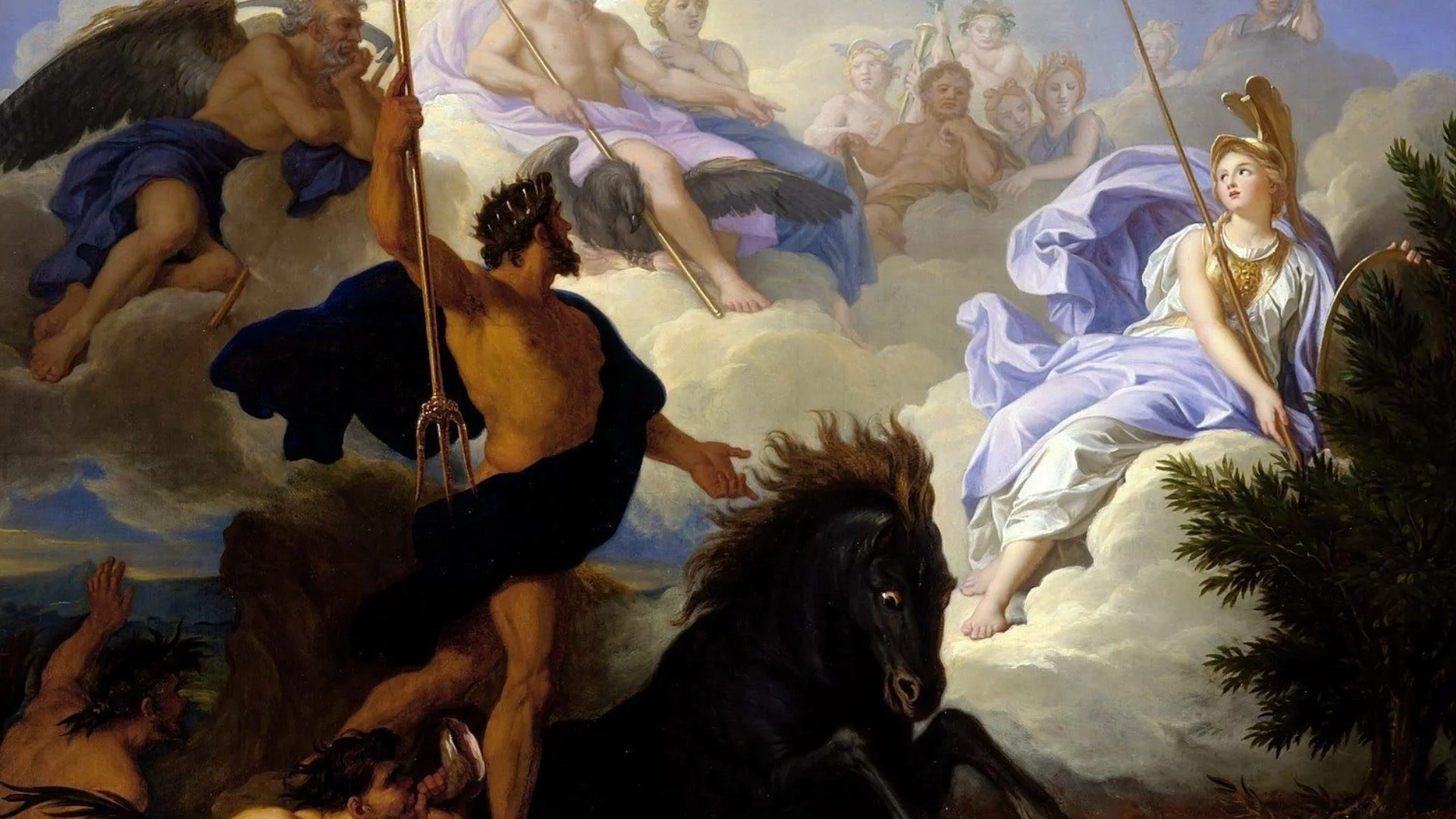
The Dispute of Minerva and Neptune by René-Antoine Houasse, 1689
The city of Athens has a very interesting foundation myth, the legend goes that the city was propping up in the Greek world and two Gods, Poseidon and Athena respectfully, wanted to be the patron deity of said city.
They bickered and debated for many days, and after seeing they had no progress in discussion, they presented their quarrel to the Olympian Gods, when the gods asked them what they could give to the city to prove their deservedness, Poseidon created the first horse, signaling his ambition to expand, conquer, become powerful and to one day be the patron god of the sole hegemon in all of Greece. Some Gods were swayed quite a bit by Poseidon’s offer but Athena had a different plan for what to gift the city.
Athena decided to gift them olive trees, but why? What could olive trees do in comparison a horse? The Gods now, even more curious than before, leaned in to ensure they hear the reasoning of Athena, the Goddess of Wisdom and Foresight.
Athena explained that, while a horse could in theory help in times of war, it could not help in a time of peace, but the humble olive tree provides food for the masses, olive oil for lamps and candles, shade on hot days and their branches for when a fire is needed, they make sure trade is possible and that wood could be provided for the citizens when fires ravage their homes. The Gods, intrigued by Athena’s gift to the city, ruled in her favour and from then on, named the city Athens.
So what’s the point of that story? Poseidon was too focused on the short term, while Athena focused on the future where her plans could work in times of good or bad.
In today’s time, we focus a lot on money, ROI, GDP, and so on with the economics of the world, but does it matter that Vermont has a higher GDP than Malta when the quality of life in Malta is far higher?
The idea here is that in this world, cities only survive for thousands of years when they’re thought out well enough every century, our ancestors had to keep us in mind when making decisions because if they ignored it, there wouldn’t be a future any longer. Chasing superficial stats on a screen will not compare to planting the seeds of trees that will fruit decades after we die, passing on crucial knowledge to our kids about philosophy and love benefit them more than teaching them about how to invest in the SPM 500 because philosophy teaches them about how to think while the SPM 500 teaches them how to make money that they will never enjoy.
The same ideas have been planted in our cities, instead of improving on what has worked for generations with the use of new technology, we instead steer towards shock value, most architects are well meaning and very good people with great intentions, but they do not see what everyone else sees, people outside the field remain puzzled to why a skyscraper keeps being built in a desert when it acts like an oven, or why we need to slap greenery on a wall when the parking lot next to it could have been turned into a park, or even when traditional architecture gets bought and “renovated” to look like the inside of a bag of crisps. The examples before are just a few of how we, in 2026, have our priorities in the wrong place.
The future is either stark for the human race or as close as we can get to “Milk and Honey”. With the current direction we are on, we will erase our history and culture for more skyscrapers and even more parking lots, where a person cant traverse the city the are in without breathing in extreme levels of smog or walk down the street without fearing that they’ll end up in a hospital. If life in the average city is already bad, then why not go on a small deviation? Every city does something right, so what if we slowly walked along that path instead?
We can bring citizens together at the City Hall or local place of gathering to sit down with a drink of their choice and just discuss what needs improving. Singapore does the metro right, Paris does urbanism right, Samarkand does cultural preservation right, if each of us join hands and advocate, a big difference can be achieved, in a decade or two, you can see a change no one before you would have ever thought.
Planning for the future that is human first, beautiful and respectful of a country’s climate and tradition is the only path correction we need on this so temporary world, instead of just focusing on what happens next week, think about what happens after a century. Plant a tree knowing you will never sit under it’s shade but that your grandkids thank you for it in the future.