August 2026: In Honour of the Maestro
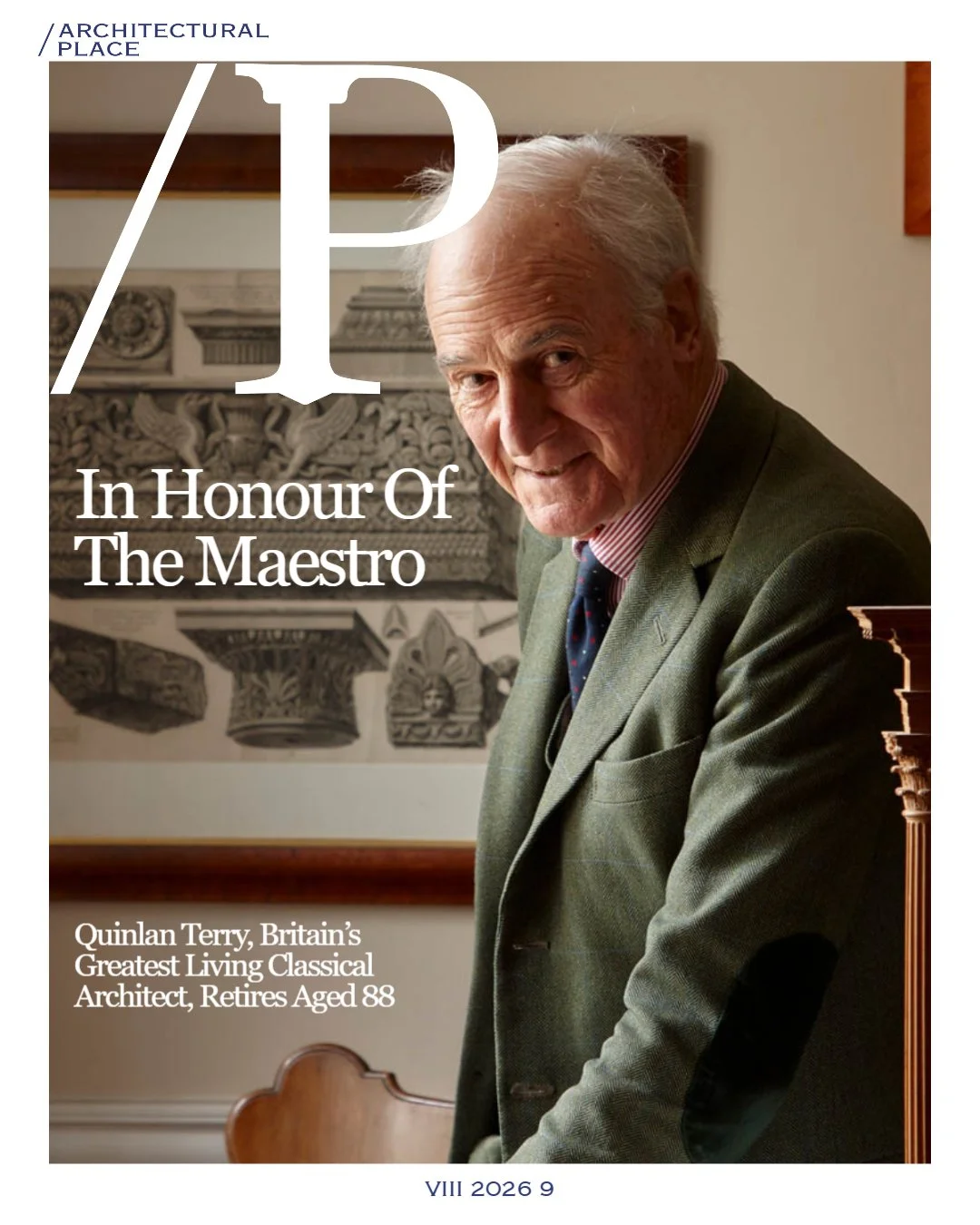
August 2026 cover of Architectural Place
On the eighth of July, Quinlan Terry Architects formally announced the retirement of Quinlan Terry (onwards, Quinlan). The practice shall henceforth be led by Roger Barrell. While a consulting role was previously announced, Quinlan has now formally concluded his involvement with the practice and will not be serving in an advisory capacity. That very same day, his son, the accomplished architect Francis Terry (onwards, Francis), confirmed that the decision had been prompted by his father’s health.
A prominent champion of Palladian design, Quinlan spent his career operating from Dedham, Essex, upholding the classical practice founded by his mentor, Raymond Erith, in 1928. Over six decades, Quinlan crafted an extraordinary portfolio, making him the greatest living classical architect in the understanding of many. Ranging from the award-winning Maitland Robinson Library at Cambridge and the bold, Wren-inspired expansion of Brentwood Cathedral, to interior restorations at 10 Downing Street. His notable works also encompass London’s Regent’s Park villas, the reorientation of St Helen’s Bishopsgate, and sweeping developments such as Richmond Riverside and Poundbury.
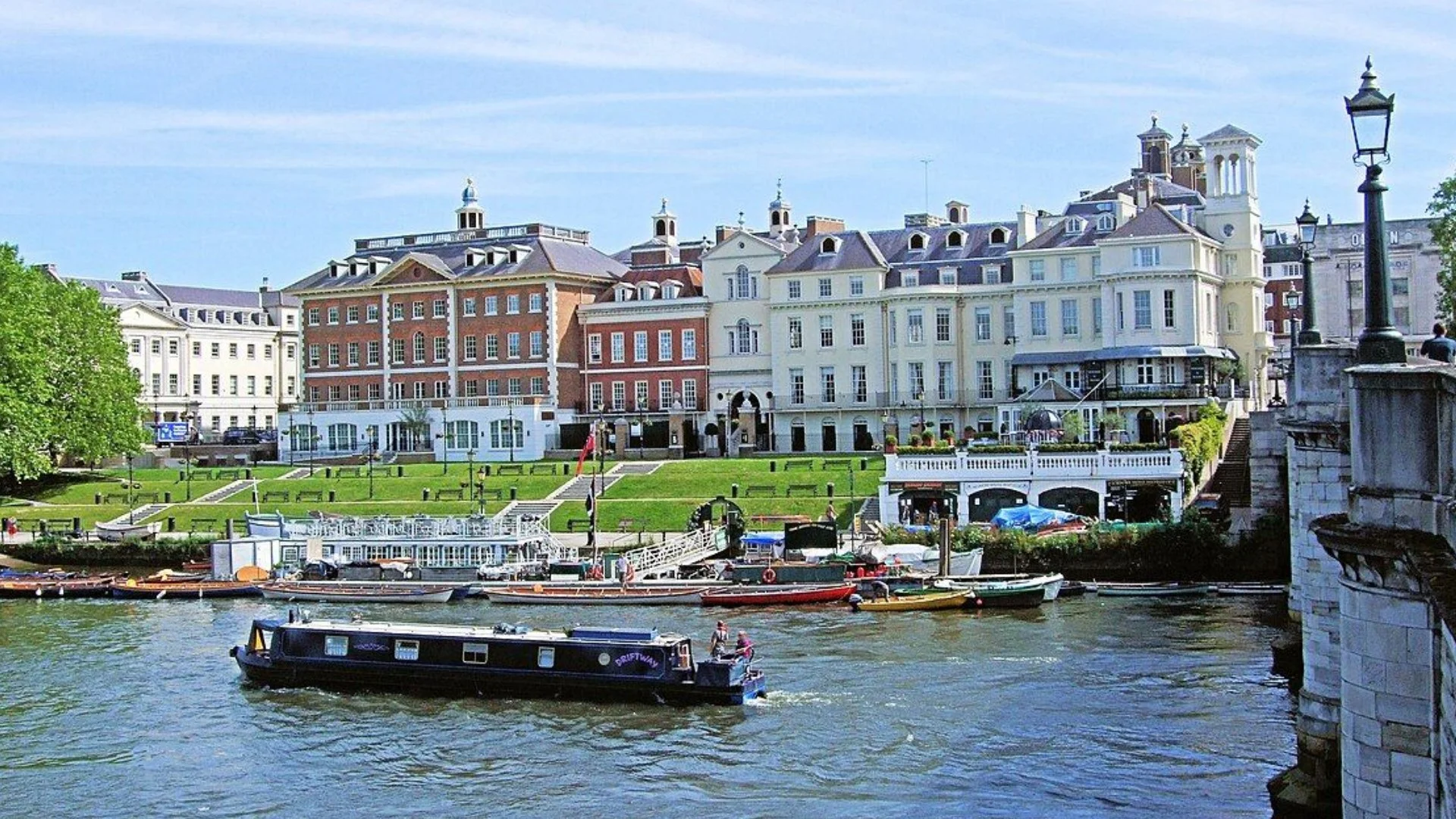
Richmond Riverside as seen from across Richemond Bridge, London, United Kingdom of Great Britain and Northern Ireland
The Richmond Riverside scheme exemplifies Quinlan’s signature philosophy, blending traditional idioms harmoniously into their historic setting, albeit with a distinct flair.
Predictably, the work polarized opinion within architectural circles. Purists from both ends of the spectrum had their view, yet, champions of the project argued that Quinlan’s relaxed adherence to classical canons unlocked a playful, thoroughly delightful aesthetic. Decades on, the development enjoys widespread public affection as supporters frequently cite it as a triumphant proof of concept, as well as Quinlan’s chef-d'œuvre.
Quinlan treated classicism as a matter of principle rather than a design choice. While the architectural world turned to modern steel and glass, Quinlan stuck to traditional brick, timber, and stone. A solid limestone building easily stands for centuries, making it far more durable and sustainable than a glass tower that needs an overhaul every thirty years.
In an article for The Spectator, published on the eighth of April 2006, the late Sir Roger Scruton observed of Quinlan: “That was how things were (modernists taking over the schools of architecture) when Quinlan Terry, our greatest living architect, entered the Architectural Association as a student in the 1960s. He attended classes that showed how to translate insane collectivist propaganda into childish isonometric drawings. Real drawing, real looking, real measuring and real moral understanding had to be learnt elsewhere. Converted to Christianity, which taught him to question all the self-serving dogmas on which he had been raised, including the dogmas of modernism, Terry set out to learn what his professors forbade, travelling to see the great monuments of Western architecture, drawing the details of country churches, studying the simple streets of our not yet ruined towns, and in general equipping himself with the knowledge that an architect needs if he is to adapt his art to its surroundings, instead of destroying the surroundings in order to draw attention to his art.”
While the architectural establishment and its modern vanguard retain an undeniably grip on contemporary development, Quinlan’s enduring legacy ensures that classicism is far from a relic of the past. By demonstrating that traditional proportions and masonry could seamlessly accommodate modern life, he provided the movement with both intellectual rigour, and physical proof.
Today, the classical movement stands stronger and more resilient than ever, quietly enjoying a profound resurgence. Through the success of his landmark projects, the ongoing work of his successors, which include his son, Francis, and a growing public appreciation for enduring craftsmanship, Quinlan helped lay the groundwork for a genuine revival.
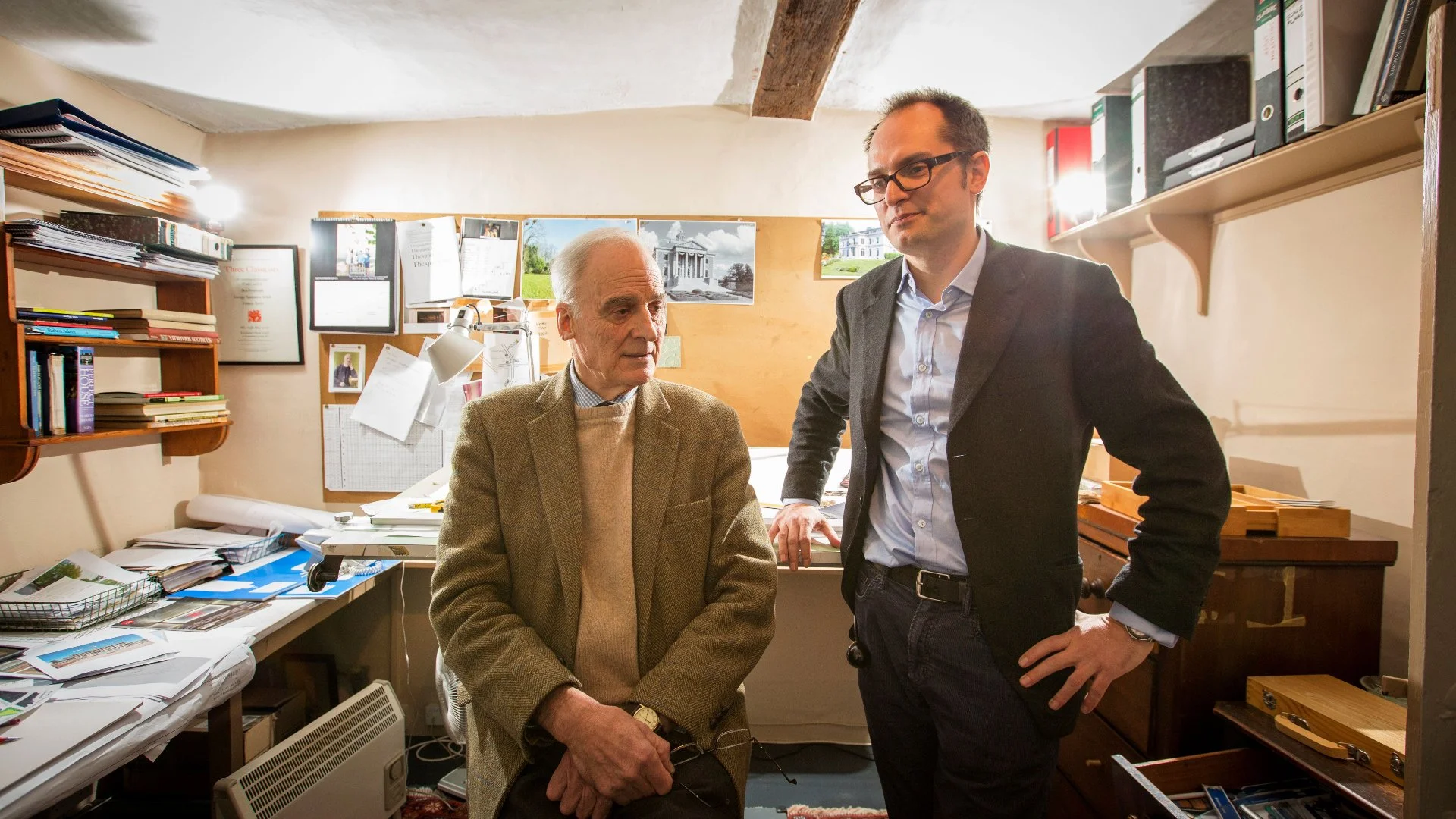
Quinlan Terry with his son, Francis Terry
Quinlan Terry Architects continues its practice, while Francis Terry & Associates likewise maintains its independent operations. Quinlan’s work earned him the Best Modern Classical House 2003, awarded by the British Georgian Group for Ferne House in Wiltshire. In 2005, he won the 3rd Annual Driehaus Prize, the most prestigious award for outstanding classical and traditional architects. He holds the Philippe Rothier European Prize for the Reconstruction of the City of Archives d'Architecture Moderne, from 1982. He was appointed Commander of the Order of the British Empire (CBE) in the 2015 New Year Honours, for services to classical architecture.
Since the early twentieth century, the West has routinely rejected its own heritage and traditions, leaving very little of value in their place. For millennia, builders built upon classical traditions to create human-centred designs. Quinlan’s lifetime of work stands as resounding proof that we are not condemned to an urban landscape dominated by the aggressive, sterile ugliness of Modernism. By demonstrating that timeless classical principles can flourish in the contemporary era, he inspired a generation of architects to reclaim a more humane, visually harmonious vision for our towns and cities. Today, as the call grows louder for new architectural schools dedicated to classical design, his legacy provides both the blueprint and the courage required for such a renaissance. He remains, undeniably, one of the true founding fathers of the modern classical revival.
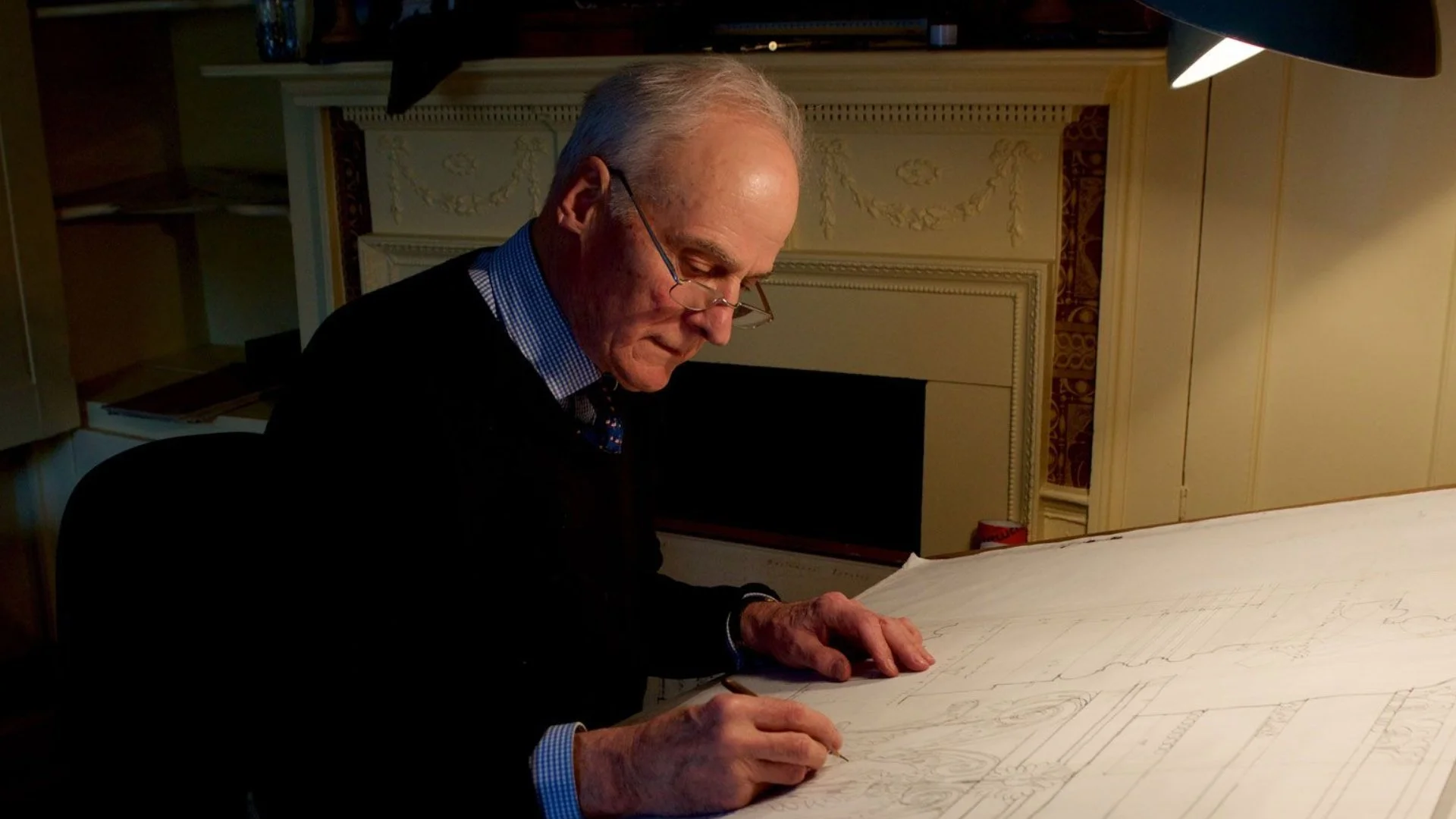
Quinlan Terry drawing
Architectural historian David Watkin described Quinlan as “the single most distinguished and prolific architect at work in the Classical tradition in either Britain or the United States. He has attempted more completely than any other architect in Britain to pull the rug from beneath the false certainties of Modernism”.
Though the modernist establishment continues its dominance over contemporary architecture, its ideological hold is no longer absolute. Quinlan, with quiet fortitude alongside a courageous few, forged a path through an era immensely hostile to traditional craft. By proving that the classical language remains profoundly humane, he achieved monumental progress when the status quo was most fiercely against him. It now falls to us to honour his extraordinary devotion.
As Quinlan steps back from the drawing board, we extend our most heartfelt wishes for his health, comfort, and peace of mind in this next chapter of his life. The architectural world, and the classical community, owes him a profound debt of gratitude for his unwavering courage, his mastery, and lifelong devotion to beauty. Through decades of changing styles, and the current dominance of Modernism, he stood as a guardian of the classical tradition. For his creations, we offer our most enduring gratitude.