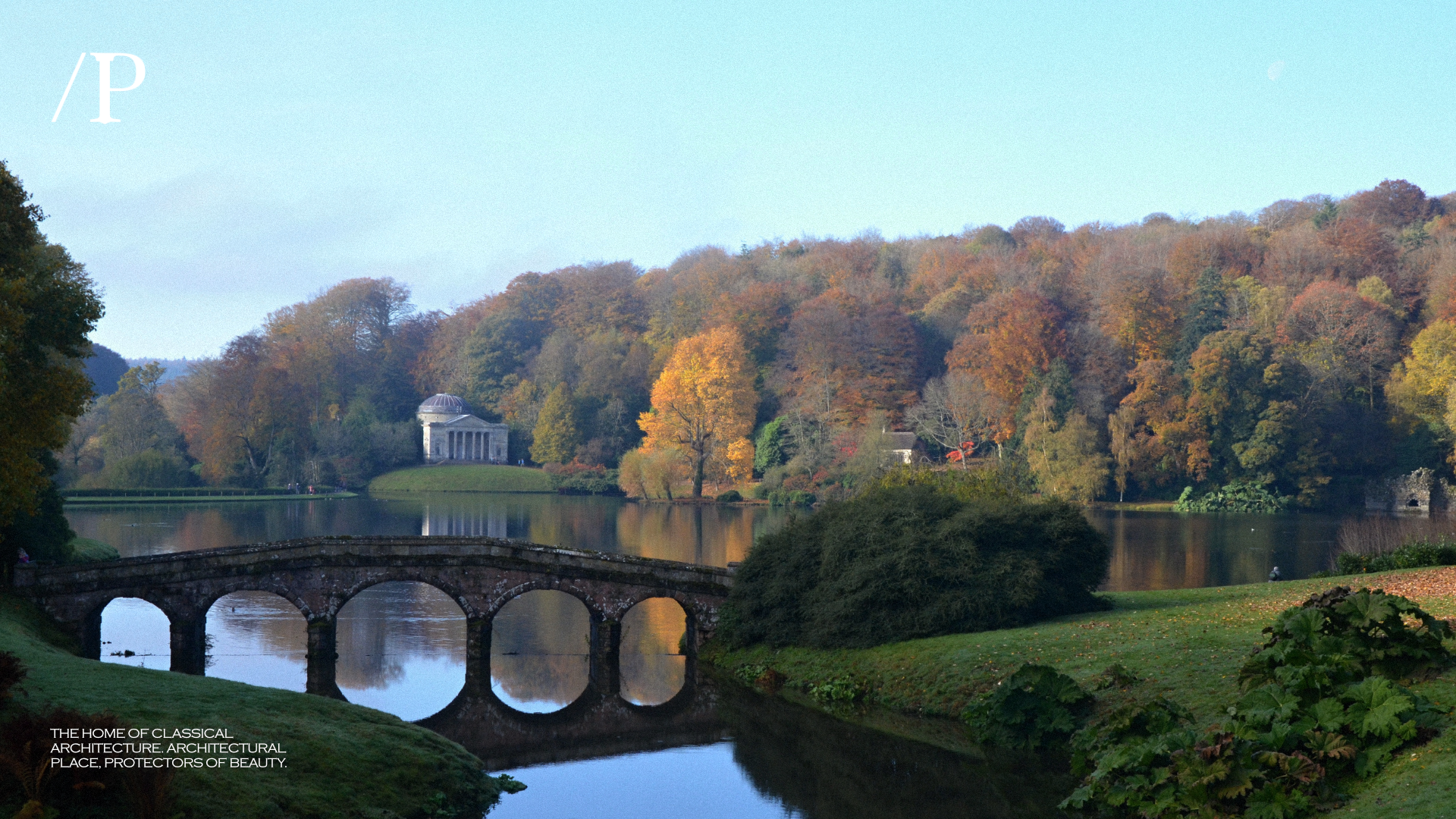

The Home of Classical Architecture.

History.
Classical architecture, rooted in ancient Greek and Roman traditions, emphasized ornamentation, symmetry, and proportion, in order to exude harmony and the continuity of culture. As the Industrial Revolution introduced concrete, glass, and steel, mass production made modern life possible. Those benefits largely prioritised speed over art, slowly changing aesthetic judgment. By the early 20th century, Modernism emerged as a reaction against beauty, with architects like Charles-Édouard Jeanneret advocating for form. In the words of Sir Roger Scruton, “beauty is vanishing from our world because we live as though it did not matter”.
The austerity of Modernism, which is visibly marked by flat roofs, unadorned surfaces, and asymmetrical forms, produces environments that are deeply uncomfortable. Through soulless design, they often lack human scale and warmth. Movements like Brutalism would later amplify this through raw concrete, with architects seeking to provoke unease in order to archive professional recognition from their peers. Empirical preferences are, however, quite clear. Most surveys indicate that the population favours traditional styles over modernist designs, associating the latter with homogeneity and cultural aversion.